1031 Exchange Miami-Dade Rentals for Smarter Upgrades
May 7, 2026
May 7, 2026
Thinking about selling one Miami-Dade investment property and moving into a stronger one without taking an immediate tax hit? A 1031 exchange can be a powerful tool, but in Miami-Dade, the right upgrade is about more than price. You need to understand the exchange rules, the local inventory picture, and the building-level risks that can affect long-term returns. If you want to reposition your investment property with more clarity and fewer surprises, this guide will walk you through the key points. Let’s dive in.
A 1031 exchange lets you defer capital gains taxes when you sell one qualifying investment property and buy another qualifying property. For Miami-Dade investors, that can create room to move from an older or underperforming asset into a property that better fits your goals.
The key point is that the property must be held for investment or for productive use in a trade or business. That means a condo, apartment building, land, or other real estate may qualify if you held it as an investment. A personal residence or property held mainly for resale does not qualify.
An upgrade does not have to mean only a bigger or more expensive property. In practice, it can mean moving into a better-located asset, a newer building, a property with stronger reserves, or even multiple replacement properties that better match your strategy.
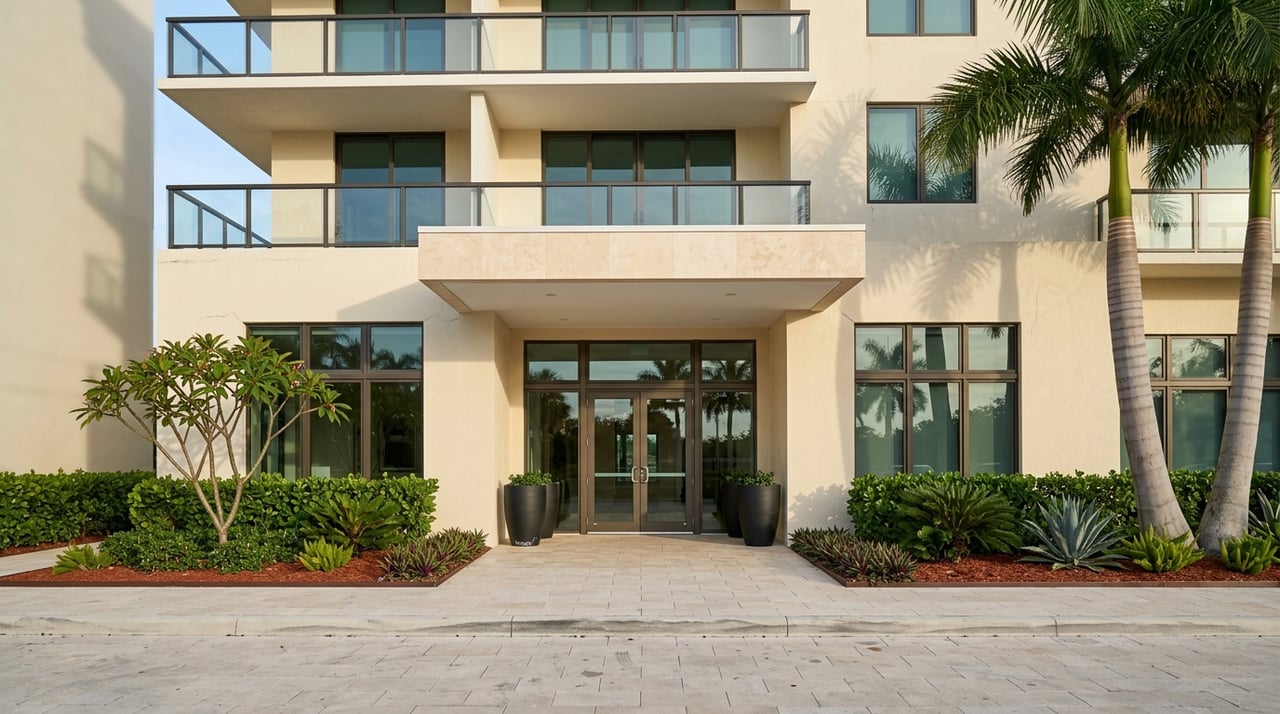
For example, you might exchange out of an older condo with weak financials and into a newer Downtown or Brickell tower. You might also sell a small underperforming asset and move into a better-capitalized multifamily or condo investment in a stronger submarket.
The exchange timeline is strict. In a deferred exchange, you must identify your replacement property within 45 days of selling your current property, and you must receive the replacement property within 180 days, or by your tax return due date if that comes first.
Your identification must be signed, in writing, and delivered to a qualified party. Most investors use a qualified intermediary as the standard safe harbor so they do not take constructive receipt of the sale proceeds.
You can identify up to three properties regardless of value. You can also identify more than three if their total fair market value does not exceed 200% of the value of the property you sold.
If you go beyond those limits, a 95% rule may apply. Because the rules are technical and the clock moves fast, your shortlist needs to be realistic before your sale closes.
If you do not roll all of your cash or debt into the replacement property, the difference can create taxable boot. In simple terms, cash out or reduced debt can trigger tax even if the overall exchange qualifies.
You also need to report the exchange on Form 8824, even if no gain is recognized. That is one reason planning the exchange structure early is so important.
Miami-Dade gives exchange buyers a wide field of options. In Q4 2025, county condo and townhome inventory reached 12,015 active units, with 13.2 months of supply, according to MIAMI Realtors county metrics.
That matters because a larger inventory pool can help you screen more carefully instead of rushing into the first available option. In a 1031 exchange, more choices can make the 45-day identification period easier to manage if you prepare in advance.
At the same time, pricing still requires discipline. In Q4 2025, the county median condo and townhome sale price was $400,000, while the average sale price was $740,479, showing a broad spread across the market.
One of the clearest upgrade paths in Miami-Dade is moving from an older condo into a newer one. MIAMI Realtors reported that in 2024, the median price for condos and townhomes under 25 years old was $703,250, compared with $330,000 for properties 25 years and older.
That gap helps explain why some investors use a 1031 exchange to trade into newer buildings with potentially stronger physical condition and reserve profiles. Still, older condos remain active when priced correctly, and MIAMI Realtors found they sold faster than newer units in June 2025, averaging 62 days on market versus 79 days for newer units.
Miami-Dade replacement searches need a broad lens. MIAMI Realtors notes that MLS-based sales releases do not capture all new-construction, pre-construction, and condo-conversion activity.
So if you are exchanging into a newer high-rise or a premium tower, your search should not be limited to one data source. A complete replacement strategy often includes off-MLS awareness and direct screening of buildings that fit your goals.
The right replacement property depends on what you mean by upgrade. Some investors want liquidity and walkability. Others want higher price-point assets, more units, or stronger long-term capital preservation.
For investors focused on urban-core demand, Downtown Miami, Brickell, and nearby areas offer a deep pool of condo inventory. The Miami DDA includes Brickell, the Central Business District, and Arts + Entertainment within its Downtown Development of Regional Impact, and the area is supported by transit access such as the Metromover.
Recent ZIP-level metrics show 33131 at a median sale price of $660,000 with 850 active listings and 17.7 months of supply. ZIP code 33130 posted a $625,000 median with 479 active listings and 18.8 months of supply, while 33137 was at $720,000.
These numbers suggest a sizable menu for exchange buyers who want to upgrade into a denser, amenity-rich location. They also support a strategy built around careful building selection rather than rushed bidding.
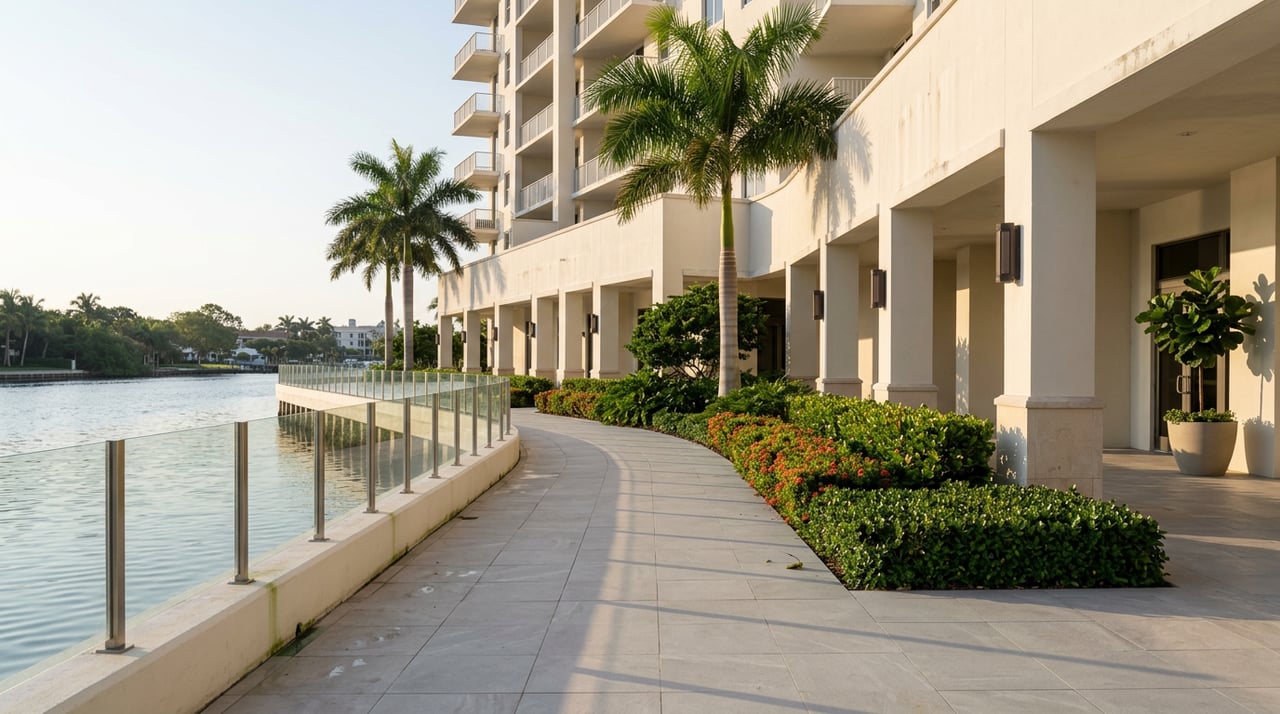
Miami Beach can appeal to investors who want a coastal condo market with multiple price bands. The city is organized around South Beach, Mid Beach, and North Beach, and Q4 2025 data showed 1,908 active condo and townhome listings with 16.2 months of supply.
ZIP-level condo medians were $467,500 in 33139, $617,000 in 33140, and $376,500 in 33141. That range gives investors different entry points, but it is still an expensive coastal search area that calls for careful review of association finances and building condition.
If your exchange budget is larger, Miami-Dade offers several markets that can absorb a sizable replacement purchase. Sunny Isles Beach posted a $705,000 median condo and townhome price with 21.7 months of supply, while Aventura posted a $395,000 median with 20.8 months of supply.
At the higher end, Bal Harbour was at $1.61 million, Bay Harbor Islands at $767,500, and Key Biscayne at $1.2875 million. These markets can fit investors focused on premium coastal ownership, but the underwriting needs to go beyond headline pricing.
Not every upgrade is about buying in the most expensive ZIP code. Some investors want to redeploy equity into more units, a larger structure, or a market with a lower entry basis.
In Q4 2025, Doral had a median of $475,000, Kendall was $370,000, Kendale Lakes was $329,900, The Hammocks was $372,500, and Fountainebleau was $300,000. Hialeah and Homestead each recorded more than 120 closed condo and townhome sales, which can make them useful screening pools for investors looking for activity and options.
If your goal is long-term location quality over maximum immediate buying power, some submarkets may stand out. Coral Gables posted a $528,000 median with only 5.9 months of supply, a much tighter inventory picture than many nearby areas.
Markets such as Bay Harbor Islands, Bal Harbour, and Key Biscayne also fit a more preservation-oriented strategy. In these cases, the exchange decision is often about asset quality and market positioning over simple unit count.
In Miami-Dade, a smart exchange is not just about finding a like-kind property. It is also about understanding what you are buying at the building level, especially in condos.
Florida law now puts major focus on building condition and reserve funding. For buildings that are three habitable stories or more, milestone inspections are required at 30 years, or 25 years in certain coastal or local conditions.
Residential condo associations must also complete structural integrity reserve studies every 10 years. Existing unit-owner-controlled associations were required to complete these studies by December 31, 2025, or by December 31, 2026 if completed together with the milestone inspection.
The reserve budget must cover major items such as the roof, painting, pavement, fire protection systems, plumbing, electrical systems, waterproofing, exterior doors and windows, and other major components over $25,000. Funding may come from regular assessments, special assessments, lines of credit, or loans.
Before you identify a replacement condo, your due diligence file should be more than a basic property flyer. In Miami-Dade, it should include:
This is especially important in older coastal buildings. A lower purchase price does not always mean a better investment if the building faces large future costs.
If you are a foreign owner selling U.S. real property, your 1031 exchange may require extra planning. U.S. and foreign real property are not considered like-kind, so a U.S. property must be exchanged for qualifying U.S. real property.
FIRPTA withholding can also still apply when a transaction otherwise qualifies under Section 1031. In some cases, the IRS may require a Notice of Nonrecognition or a withholding certificate, which is why cross-border investors should coordinate the exchange documents from the beginning.
A strong 1031 exchange starts before your sale closes. You want your likely replacement markets, property type, and due diligence checklist lined up before the 45-day clock begins.
For many Miami-Dade investors, the best move is not chasing the flashiest property. It is choosing the replacement asset that better matches your risk tolerance, reserve expectations, location goals, and long-term investment plan.
If you are considering a condo or high-rise exchange in Miami-Dade, careful market screening and building-level review can make the difference between a smart repositioning and an expensive surprise. When you are ready to plan your next move, Chuck Levine can help you evaluate Miami-Dade opportunities with a clear, investment-focused approach.
Stay up to date on the latest real estate trends.

Get assistance in determining current property value, crafting a competitive offer, writing and negotiating a contract, and much more. Contact me today.